The lightest thing we make.
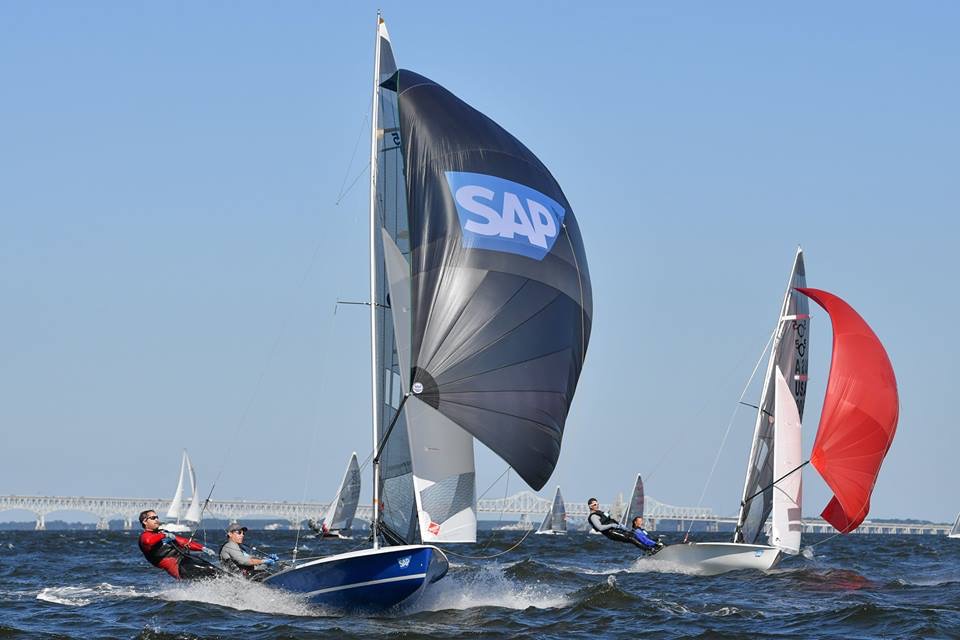
For high-performance dinghies and day sailers, silicon-coated cloth that defeats other methods, and sails pulled through a chute several times a race. It is light enough that measuring it accurately is the hard part.
That part stays with us.
NaNo-Print took years to arrive at, and the method is not something we publish — not to a customer, not to a competitor, not in a brochure. There is no version of this page that explains it.
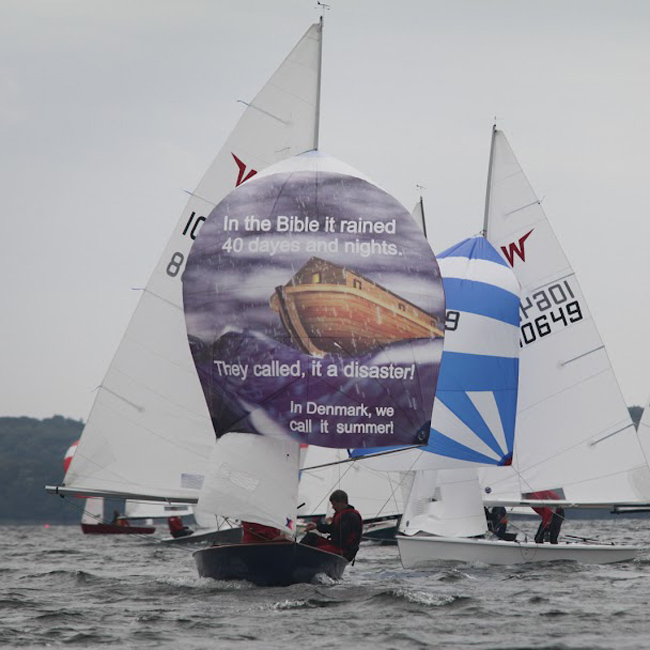
What we will put in writing is what it does, because that is the part you can judge. It is the lightest option we make. It bonds to silicon-coated cloth, which is the case that defeats most printing. And it survives being dragged through a chute, which is the case that defeats most of the rest.
- The lightest option in our range
- Works on silicon-coated and siliconised cloth
- Survives repeated chute launches and retrievals
- Built for high-performance dinghies and day sailers
- Vibrant colour, no restriction on artwork
NaNo-Print in numbers.
Prices are not published — most people find them lower than they expect. Send the sail and the artwork and you will have a figure.
Straight answers.
More on the answers page.
Why will you not describe the process?
Because it took years to develop and it is the part a competitor would copy. We publish what it does, not how. If you want to judge it, judge the sail.
Full answer →Is UV a problem?
NaNo-Print is the most UV-sensitive of the four. In practice that matters far less than it sounds, because of where it is used: dinghies and day sailers come down and go away after sailing.
Full answer →Can you print on siliconised cloth?
Yes. It is the hardest case in sail printing, and it is the reason NaNo-Print exists.
Full answer →How thin can the cloth be?
There is no lower limit. Thin cloth is the easy case — thick, opaque cloth is the harder one.
Full answer →